[00:00:00] Every day, people come to me with completely different stories, different childhoods, different careers, different relationships, different struggles. But underneath all of those stories, I kept noticing the same patterns. Not personality types, not diagnosis, not labels, patterns. Ways we learn to protect ourselves when we're under threat.
Once I started seeing them, I got curious about why these patterns show up, and what is their purpose?
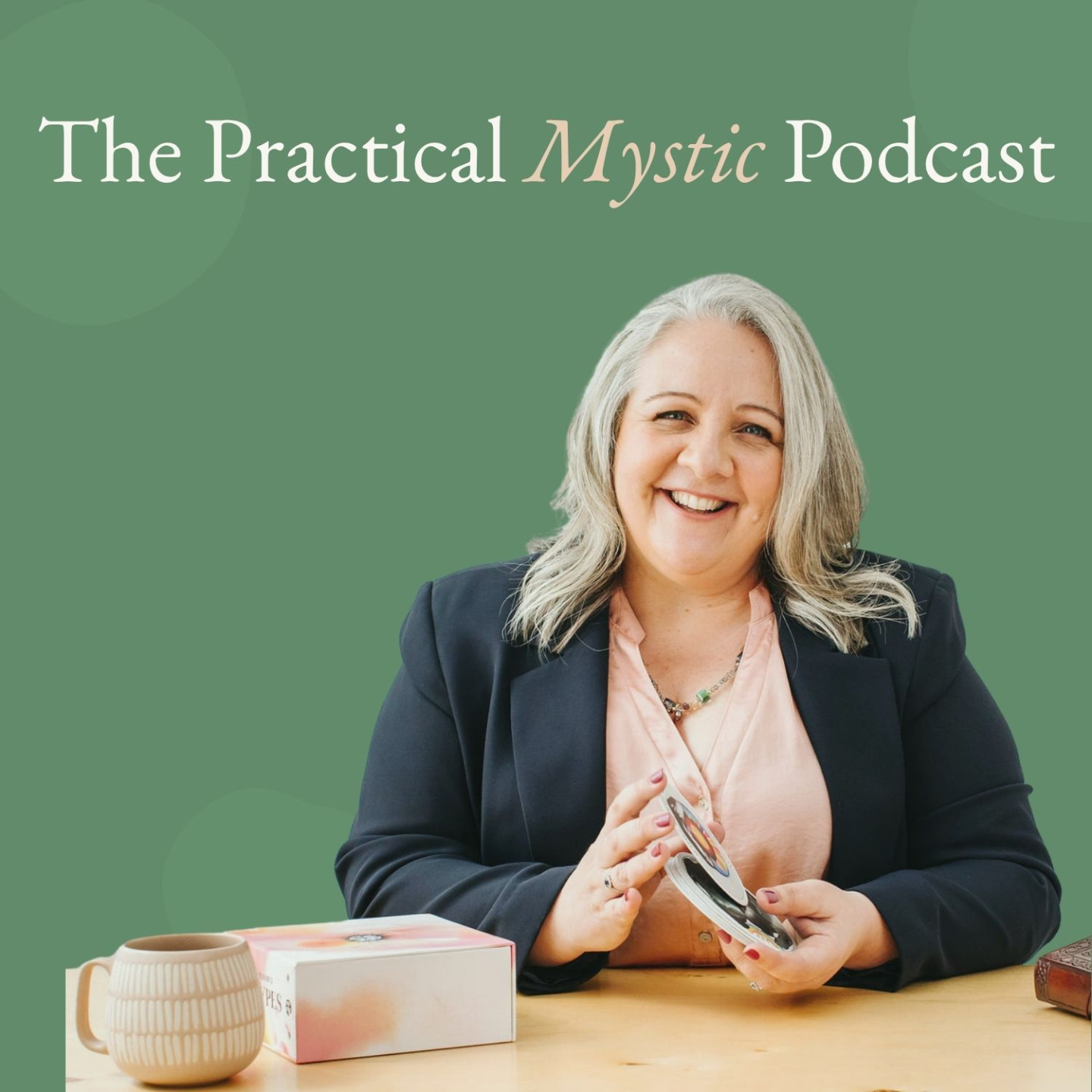
Hi, I'm Nicki Kuurman. Welcome to the Practical Mystic Podcast, where mystical wisdom meets modern life.
A client would walk into my clinic and tell me that she's listened to every podcast, every book, completed every course that she could find.
She understood attachment styles. She knew about the nervous system. She could explain exactly why she was [00:01:00] reacting the way that she was reacting. She says, "I know all of this, but why am I still stuck?" Another client would sit down. She didn't need a course or another idea or another podcast. She just wanted everyone around her to be okay: her husband, her children, her friends.
When I asked her what she wanted, there was silence…. Then “I'm fine. I've got this”…
They were carrying everything themselves. They rarely asked for help, and they built a life around being capable, being the strong one. Another client would come in completely exhausted, on the verge of burnout. They've spent years holding everyone else together. They feel like if they let go, everything's going to fall apart. [00:02:00]
Different people, different lives, yet something about them strangely seemed familiar. And I remember thinking, "There has to be something deeper going on here." I don't believe we are born having to earn love, to prove ourselves, to keep everyone happy so that we can be safe, to carry the weight of the world's problems on our shoulders.
Those aren't personality traits, they're adaptations. As children, we learn. We learn what keeps us safe, what earns us approval. We learn how to avoid conflict. We learn how to belong, and those strategies are incredibly intelligent. They help us survive. The problem is we often keep using them long after we need them, until one day [00:03:00] we mistake them for who we are, and that's the part that fascinates me.
I often hear people say, "That's just who I am. I can't change this. I'm just an overthinker. I'm always the responsible one." But what if that isn't who you are? What if that's simply what you've learned to stay safe? Over the years, I've realized that these protective strategies tended to fall into four distinct patterns.
Not boxes, not identities, simply the default way that we proceed and respond when life feels uncertain, when we're overwhelmed, when we feel emotionally unsafe. And I call these four patterns the alignment patterns. The first one is the seeker. The seeker believes that if she can just find out a bit more information, everything will be okay, and she'll know [00:04:00] how to proceed.
They love learning. They're curious and thoughtful and insightful, and sometimes they just get stuck searching for certainty instead of being able to trust themselves. The second one is the attuner, and the attuner is deeply aware of everyone else. They can feel the mood of a room within the split second that they walk into it.
They notice what people need. They're compassionate. Their empathy is just next level on point. They're beautiful listeners, and somewhere along the way, they've learned to tune into everybody else before themselves. The third one is the guardian. The guardian usually arrives after deep hurt when being vulnerable [00:05:00] just doesn't feel safe anymore.
They are incredibly capable and independent, strong. They don't like asking for help, and they'd rather carry it all themselves than bother anyone. And it's not because they don't care, it's because they're protecting themself from any possible hurt. Protection has become second nature. And finally, the anchor.
The anchor is the dependable one, the reliable one, the person you lean on in crisis. They are often the calm in the storm, and one day they realize they're carrying far more than was ever theirs to carry. Now, here's what I really want you to hear today. None of these patterns are bad. In fact, I think they're all incredibly [00:06:00] wise and valuable.
They have helped protect you and kept you alive right up until today. The seeker searched for certainty. The attuner preserved connection. The guardian prevented hurt and betrayal and pain. And the anchor created safety. Each one has developed for a reason. So, the problem isn't the pattern, it's when we forget that we have a choice. That we're not locked into subconsciously holding these patterns as the only way of responding in a crisis.
One of the things I say all the time is you don't need to become someone else, someone new. You simply need to remember who you are before all of that survival pattern [00:07:00] became your identity. You simply need awareness, and awareness is where freedom begins. It's not becoming, it's not something you haven't seen yet.
It's remembering who you've always been. Not fixing, returning. Not trying harder, coming home to yourself. As I've been describing each of these patterns today, I know that I recognize myself in many aspects, and you might do too. That's completely normal. Most of us will have one default that we lean into more than the others when we're stressed or under pressure.
It's a simple strategy that we've used and learned and relied on to get us through. But awareness changes everything because once you can see the pattern, you no longer have to live from it [00:08:00] unconsciously, automatically. You can now thank it for how it's protected you, discover the superpowers that lie within that pattern, and gently choose how you want to proceed from here.
Over the next few episodes, I'm going to explore each of these patterns more deeply, where they come from, and how they show up in your everyday life. The gifts that they bring us are immense, and how they can quietly be keeping us disconnected from ourselves and other people around us. And if you're already wondering which one feels most familiar to you, I've created a free alignment quiz that I'll link to the show notes to help you discover your alignment pattern and understand yourself a little more deeply.
Until next time, stay curious, trust yourself, and remember who you truly be. Thank you so [00:09:00] much for joining me on the podcast today. Please like and subscribe if you're watching on YouTube or follow on your favourite podcast platform to be notified of the next available episode. Until next time, bye.