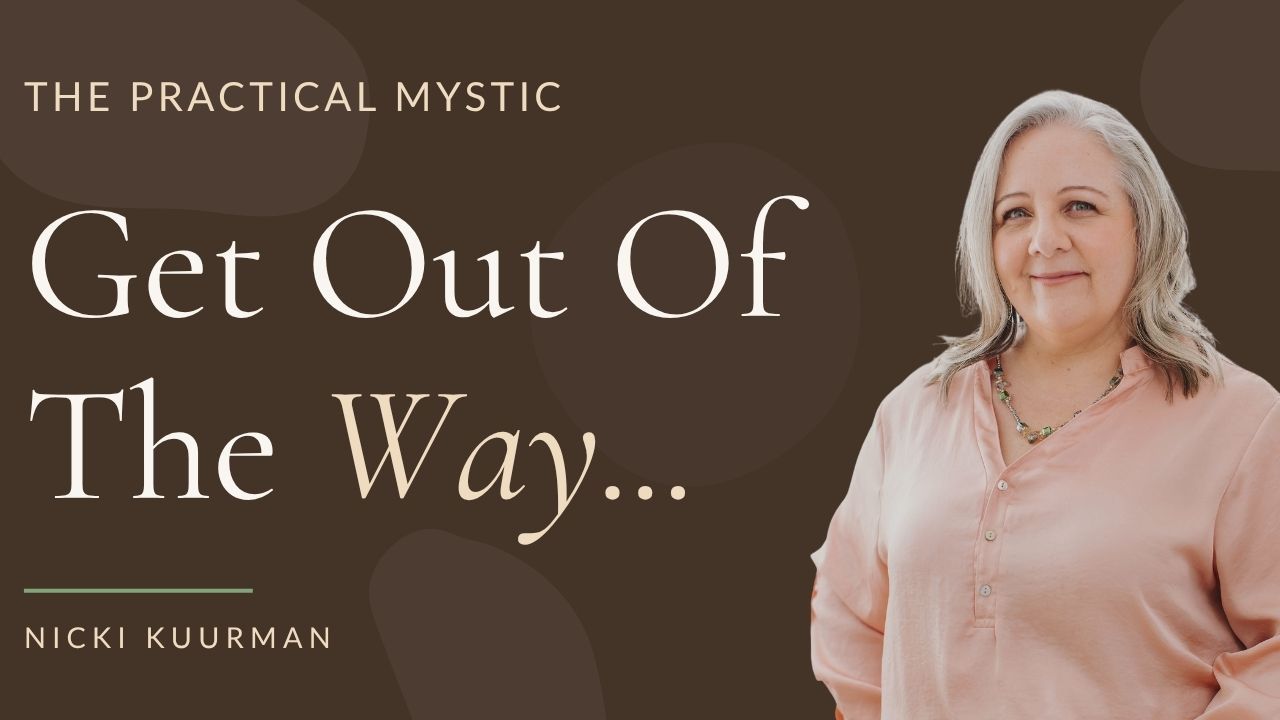
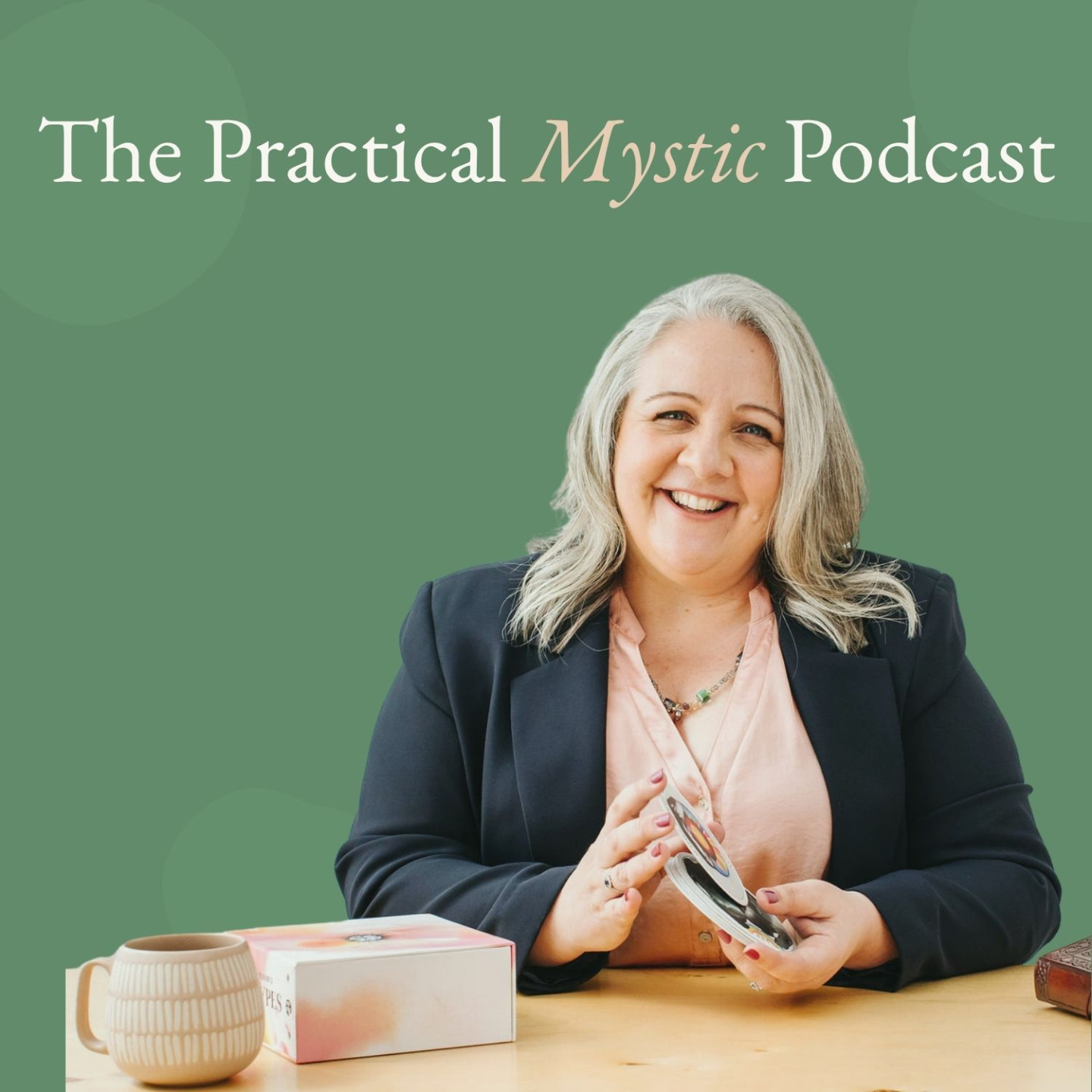
EP6 - The Practical Mystic
[00:00:00]
So why don't high-functioning women notice when they're holding too much? When they're on the verge of burnout, what happens to them?
Emotional burnout doesn't have to look like collapse. In fact, quite often it looks like you're really successful, hustling, holding it all together. In some ways, you look like Wonder Woman, but your nervous system is taking a toll. That's going to lead to long-term issues.
So many women come to me when they're just about on the edge or have tipped over the edge of collapse that they are so burnt out that they are actually unwell. I would love to see them six months earlier. They don't get to my door until they are completely fried. That's why I want to bring this podcast and these conversations to light, because we are running ourselves to the point of exhaustion, because our nervous system cannot hold the level of stress that we are giving it for long periods of time.
[00:01:00] I know when I was at this stage, if someone had said to me six months earlier, you are heading for the cliff, I would've denied it. I didn't think I was there. I didn't think I was close to being burnt out. I was successful, I was functioning. I was doing all the things I was saying yes to, stuff that I knew I didn't really want to do, and I really had to look at why I was holding these patterns and trying to be the anchor and the one who had it all together, when really what I needed was support, rest, and a little bit of peace.
If you are the one who's holding it all, I want to ask you this. What exactly is it that you think you're holding?
Hypervigilance is a state of protection. It's a protection mechanism that we develop quite often from a very early age, and just [00:02:00] like a habit, it becomes a normal baseline in our nervous system. And so
We default to those unconscious programs that we learned to cope when we were children, and for many women that I see in my clinic, hypervigilance is one of the strongest issues that we have to combat, especially when adrenal fatigue is involved, when long-term unwellness is starting to creep in.
Particularly around perimenopause, we just can't cope the way we used to because when we are stressed, we have a lot of chemicals flooding our system. And over time, our body's ability to cope with that chemical load diminishes because we've worn out the pathways.
We've been stressed for so long that everything's starting to break down. What could be different? What would you do instead of the hypervigilance? What would you do [00:03:00] instead of the rushing women's consciousness? What would you do? Instead of being so busy, you don't have time for yourself. Not just time out, but real time to be fully you in your life.
Another issue I see in clinic often is women coming in when being capable is not only their superpower, it's their identity. They are known to be the strong one, and the fear of burnout is What am I going to do if I'm not that person anymore? This starts to become an identity issue, not just habits, not just childhood programming or things that have kept us going.
But when we actually look at this as an identity pattern, I am the one who holds it all, I want to ask you this. What exactly is it that you think you're [00:04:00] holding?
When I was young. I, I don't even know where I was. I saw a calendar on the back of a bathroom door, and this calendar had a picture of a beautiful river with a statue of Buddha, and it had a quote on it and it said, Buddha says, nothing is in control. Everything is perfect. Relax. And it stopped me in my tracks.
I remember for years and years that I would ponder this question of, what if I let go of the control
What if I gave up control and everything's perfect? What does that even mean? My nervous system was not letting me have a bar of that but as I ponder it now I see that I'm usually the problem when I try to hold everyone and everything around me together.
I'm stopping them from taking responsibility for their own life.
When Rob and I moved in together, we became a blended family and the kids and Rob and I all had to learn how to be in a new space with new people in [00:05:00] a new dynamic. And I spent a lot of energy trying to hold everybody steady to smooth over conflicts and. I was so exhausted. I was so hyper alert of how everybody was feeling.
And I'd come home from work at night and before I even walked through the door, I could feel my spidey senses reaching out to go, what am I going to walk into? Are they going to be angry? Is there going to be this silent tension? It was sort of a passive-aggressive air that I would feel even before I walked through the door.
I'd brace myself, and I'd go, okay, game on? I didn't work very far from home so I didn't have a lot of transition time from my work, Nicki to my home, mom and wife, Nicki. Sometimes I would just sit in the car, not wanting to go inside.
For just a few minutes while I gathered myself and let one part of my life close down for a minute before [00:06:00] I had to walk in the door and hold another part of my life together. And for so many years, this was my normal, just people-pleasing, trying to smooth over conflicts, interpreting what was being said and unsaid.
Trying to help everyone in the family understand each other's positions. One day I had an opportunity to go overseas, and I was leaving them all behind for two weeks. I was terrified because at the time my husband and my son were having some altercations, and I was like, how the hell am I going to leave these two alone for two weeks?
By day three? They had sorted it all out. There was no problem, and that's when I realised, really, truly, that I was keeping everything in play by trying to hold it all together. They didn't need me to hold it together. They needed me to get out of the way so they could find their own way with their own relationship.
I had to let them get on with it, and it was the hardest and [00:07:00] easiest thing in the world to do. Because when I stepped back, things took their flow, and I remember, ah, this is what it means. Get out of the way. This is what Buddha was talking about. Stop trying to control everything.
Everything is perfect.
So why don't high-functioning women notice when they're holding too much? They've got it all together.
They've take command of a boardroom, take command of their home. Then internally they're wondering why they're awake at two o'clock in the morning and their mind is spinning. We were never meant to hold all of this alone, and we were never meant to hold this much stress in our body all at once. Our nervous system is just not designed to cope with high stress for long periods of time without coming back to centre without reprieve.
Often high-functioning women don't notice this because, as I said, it's been a pattern since childhood. They were praised for [00:08:00] doing all the things and getting good grades
We’re expected to hold a lot of responsibility in the home, as well as trying to find the right husband so that you can have a nice, perfect family and continue on the next generation. There was so much expectation, and I don't know that the expectations really change that much now.
But what I do see is that we have choice and we don't have to operate from just because this is the way it's always been, that this is the way it has to continue. What I invite is, what do you want most right now? Because it's probably changed. It's definitely changed since you were a teenager.
It's definitely changed since you were in your twenties. If you're in your thirties, forties, fifties, or beyond, now every decade has looked different.
When we operate from this unconscious old way of beingness, whether it's socialisation, cultural, or family values, we [00:09:00] don't stop and ask, is this actually even what I want anymore? Why am I doing this? What is it that I expect I'm going to get out of continuing this pattern without looking after myself?
As a human being, we are not a human doing. We put so much value in what we can do. We forget to put value in who we are.
You don't have to hustle to prove your worth. When you know who you are, in truth, all of that fades away. Yes, you can still choose to have a career and be successful. It's not a this-or-this situation.
When we are only focused on our energy out, then we're only focused on what that external world is giving us back. When we're focused more into, this is who I be and we know our sovereign worth, we can choose to step. We can choose to stay. We can choose [00:10:00] to do, we can choose to be more. The only purpose we have as humans is to create, to come here in pure light and energy and create whatever the hell we want.
Oftentimes though, we are creating from old patterns and loops, old belief systems from our family. Because before the age of seven, everything you parents believe, you believe everything your parents have in their world is what you have in your world. If your parents are Catholic, you're a Catholic. If your parents are Jewish, you're Jewish.
If your parents are a hippie, you are hippie. It's only after then we start to explore different families and different dynamics at school and other social settings that we go, Hey, these people go to church on Sunday. That's weird. And these people light candles on a Friday. And hang on, you live in a caravan.
That's when we go, oh, not everything is the same. And we start to branch out, right? We start to unlearn our childhood patterns. [00:11:00] Hypervigilance the need to do and please, is so ingrained, not just from that family before we were seven, but the societal patterns and expectations, perhaps our schooling, our peer group, our social standing, are operating from these unconscious beliefs. until we are met with something contradictory,
Then we can choose, and all the power comes from our own choosing.
When we are holding everything for everyone else, we are choosing it. When I was getting in the way of my family dynamics, I was choosing it, albeit unconsciously, but also somewhat consciously because I wanted to keep the peace. I wanted things to be smooth. I needed them to be smooth. I needed it to feel calm.
I needed to be in control.
As I started to unwind my own hypervigilance, what I really came to notice[00:12:00] when I started to let go and step back and hold myself in my own space better. That I felt like I wasn't getting results, that I wasn't moving forward because when I was in that hyper doing state, of course I was being praised, being productive.
I was efficient, I was getting stuff done, and I mistook that productivity for dysregulation. I mistook that busyness. Purpose.
I think what was really scary in the early days of coming off of that adrenaline rush was I seemed to lack clarity. I'd confused adrenaline with clarity for so long that I thought I was always right. And that my ego mind would always just shut into what I know. That's the truth. That's the way it has to be.
Just keep on going.
And I was terrified if I lost control of that, what life might look like. And the irony is when I got to [00:13:00] burnout stage, I was completely dysfunctional. There was no clarity. I had lots of adrenaline. I was like chasing my tail. I was going nowhere, and eventually it just collapsed, and I was really unwell for some period of time, and I had to reevaluate every single part of my life, my relationships, my work, how I was working and functioning in the world, what I was doing to support or ignore my wellness.
I was terrified that if I stopped, I was going to break down until the universe just pulled the rug out from under me and I was forced to stop. And this is the thing with adrenal fatigue. We walk closer and closer to the cliff, and we just fall off the edge. There's often no warning at the very end, and that's why I always say.
I'd love to see women six months earlier than I usually do because when people are in that state of [00:14:00] burnout and they've fallen off the cliff and they're really unwell, I don't even see them at that point. They often wait until they've tried a whole bunch of other stuff before they actually admit that patterns need to change.
That they need to change. We are so conditioned that answers live outside of ourselves and we go seeking. I know for me, that's how I became a kinesiologist. I wasn't happy with the results I was getting in modern medicine and I knew that there had to be a better way.
And so in my own journey, I found coaches and healers, who showed me that there could be other ways that I didn't have to keep doing this the same way that I could choose again. And all the work I've done in the last 20 odd years has been about understanding the power that we hold.
We can choose from a different place of consciousness, a different state of awareness, and I hope for you don't have to burn out before you can start to consider, Hey, is this the right path for [00:15:00] me? You've probably been having some warning signs. Your body's probably been screaming at you for some time.
Hey, I need to rest. Slow down. This isn't working for me anymore. It's the headaches, it's the tummy aches. It's the pain in our body. It's all telling us, Hey, notice me. Something's not right here.
Everything I teach in the quick shift on a Thursday evening is about how we listen and recalibrate our tuning into ourself When we come back to center, when we hold our true self present first, we get to choose again, and we get to choose from a grounded, centred, embodied place, not choosing from a pattern or what we should be doing or what we've always done.
Continued realignment is what moves the dial, and it's the first step to making imperative change not just to your nervous system, but to your [00:16:00] relationships, how you operate in the world, and most importantly, how you feel the hidden cost of staying in this dysregulated state. Overhold overstressed.
Overstimulated is the chronic pain, the chronic tension, the tight shoulders and jaw. Often it shows up as low-grade resentment toward people because we're sick of holding everything for everyone else, even though sometimes we've recreated that; it can be a loss of desire. A loss of libido, a loss of life force energy, a loss of I just don't know what I want anymore because I'm so busy.
How often do we think about our own desires, our own needs?
When you are always the stable one, and there's nobody holding you, you don't have time to consider yourself, but if you don't consider yourself, then you are not going to have any more [00:17:00] energy to be the one that holds it all together. Something has to give when you feel regulated. When you are in your recalibrated state and you are in that state of alignment and oneness, your breathing deepens. The tension in your body starts to melt, your heart rate slows. You start to have a little clarity in your thoughts.
You have emotional fluidity. You can go with the flow. It's much easier to let go of that control and stay flowing along in the river when you're not trying to hold things that were never meant for you to hold. Regulation doesn't look like collapse. Regulation doesn't look like doing nothing.
Rest doesn't look like doing nothing.
You don't have to break it all down to break through. Micro alignments. are the first step in regulating your nervous system and finding a new way of being.
What I'm really passionate [00:18:00] about in my work is not trying to fix burnout. It's about recalibrating these patterns so that you can let go of old ways of being that no longer serve you, that you can release stress and friction from your life. So things start to move again, that you see things clearer and from a broader perspective.
This is why I don't just teach mindset, and I don't just do body work. We have to look at the whole part. Spiritual, mental, physical, emotional, chemical, all of it. Not one thing is the answer. You have to look at everything holistically.
When you work with your nervous system, you begin to feel safe again. When you feel safe again, you can expand and when you expand, you let more light in, more possibility and listen to your soul self a whole new level.